
Idaho
Proposed 2026 Abortion Amendment
Idaho currently has one of the strongest pro-life laws in the nation, protecting unborn children throughout pregnancy except in limited circumstances. That protection is now under threat.
A coalition called Idahoans United for Women and Families is gathering signatures to place the Idaho Reproductive Freedom and Privacy Act on the November 2026 ballot. If approved, the measure would dramatically weaken Idaho’s existing protections for unborn children and significantly restrict the state’s ability to regulate abortion.
The proposal would create a constitutional right to elective abortions through most of pregnancy. It would prohibit the state from restricting abortion before fetal viability, which is generally considered to occur around 22–24 weeks of pregnancy. At this stage, the unborn child is fully developed. This create elective abortions throughout most of pregnancy and would invalidate Idaho’s current protections for unborn children during that period.
The measure would also make it more difficult for lawmakers to enact future protections for women and girls because any abortion regulation would have to survive heightened legal scrutiny under the new statutory framework.
What Would Change?
If the initiative passes:
- Idaho’s current near-total abortion ban would be effectively overturned.
- Elective abortions could become legal through viability.
- Existing protections for unborn children would be substantially weakened.
- Courts—not voters or legislators—would likely be asked to determine the scope of many abortion regulations.
- Future efforts to enact parental involvement laws, informed consent requirements, waiting periods, or health and safety regulations could face new legal challenges.
Supporters describe the measure as restoring “reproductive freedom.” Opponents argue that it would erase protections enacted after Dobbs and move Idaho toward a much broader abortion regime than voters currently have.
Current Idaho Abortion Laws
Following the overturning of Roe v. Wade, Idaho’s trigger law took effect in August 2022. This law protects unborn children throughout pregnancy and prohibits abortion except in limited circumstances.
Exceptions
Abortions may be performed only:
- To prevent the death of the mother.
- In cases of rape or incest.
The rape and incest exceptions require specific documentation under state law.
What Does “Abortion Until Viability” Mean?
The proposed initiative would prohibit Idaho from banning abortions before fetal viability, which is generally considered to occur around 22–24 weeks of pregnancy. While viability is often discussed as a legal concept, it is important to understand what development looks like at this stage of a child’s life.
Development at 22 Weeks
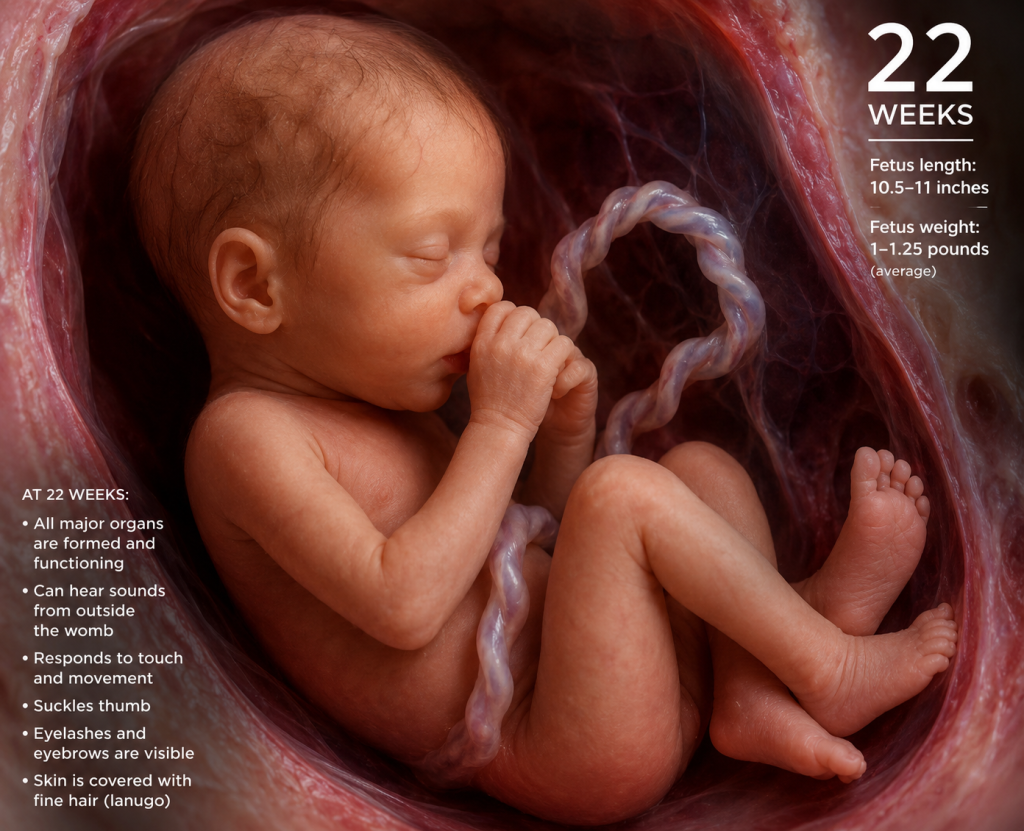
By 22 weeks of pregnancy:
- The baby’s heart has been beating for months.
- All major organs have formed and are continuing to mature.
- Fingers and toes are fully formed.
- The baby can swallow, stretch, yawn, and make facial expressions.
- The baby can respond to touch and other external stimuli.
- Hair is growing on the scalp.
- Parents often learn their baby’s sex during the routine anatomy ultrasound performed around this time.
- The baby measures about 11 inches long and weighs approximately 1 pound.
At this stage, many parents see detailed images of their child during a mid-pregnancy anatomy
How Are Abortions Performed at This Stage?
Abortions performed during the second trimester are typically conducted using a procedure known as dilation and evacuation (D&E).
The procedure generally involves:
- Dilating the cervix over a period of hours or days.
- Using suction and surgical instruments to remove the fetus and pregnancy tissue from the uterus.
- Because the fetus is significantly larger at this stage of development, the procedure often involves removing fetal remains in multiple pieces.
- Examining the remains afterward to ensure that all fetal tissue has been removed.
D&E is the most common method used for abortions performed after the first trimester.
Because viability generally occurs around 22–24 weeks, a viability standard permits elective abortions at a point when the unborn child has recognizable human features, functioning organs, and is only weeks away from the stage at which some babies can survive outside the womb with modern medical care.
Protection for Mothers and Babies
Idaho’s law reflects the principle that both mother and child deserve legal protection. The law permits physicians to intervene when necessary to save a mother’s life while recognizing the humanity and legal interests of the unborn child.
The state also maintains informed consent requirements and other safeguards intended to ensure that women receive accurate information before making life-altering decisions.
Why This Matters
The Idaho initiative is part of a broader nationwide effort to roll back pro-life protections through ballot measures rather than through the legislative process. Similar initiatives in other states have been used to invalidate longstanding protections, including parental involvement laws, health and safety regulations, and limits on late-term abortions.
If approved, the Idaho measure would fundamentally change Idaho law by creating new legal protections for abortionists and dismantling the safeguards currently in place for unborn children and their mothers.
For Idaho voters, the question is not whether abortion will be legal in limited circumstances. The question is whether Idahoans are willing to enshrine a constitutional right to abortion well into the third trimester.